If you were to make a CBD purchase for the first time, would you know what to look for? If you’ve already purchased CBD, do you know if your product is real? If you already have an effective product, do you know what makes that product work so efficiently? CBD can be an extremely beneficial product for someone, but if it’s a low grade product or derived from an unreliable source it could have little to no benefits for the consumer. This could also give a bad rap for the CBD image.
I will be giving current and potential consumers the necessary knowledge in order to select a quality product that has the highest chance of success. Everyone’s need for CBD will vary, but the need for a quality product will never change. This information will be a permanent quality assurance guide for all future purchases.
Certificate of Analysis
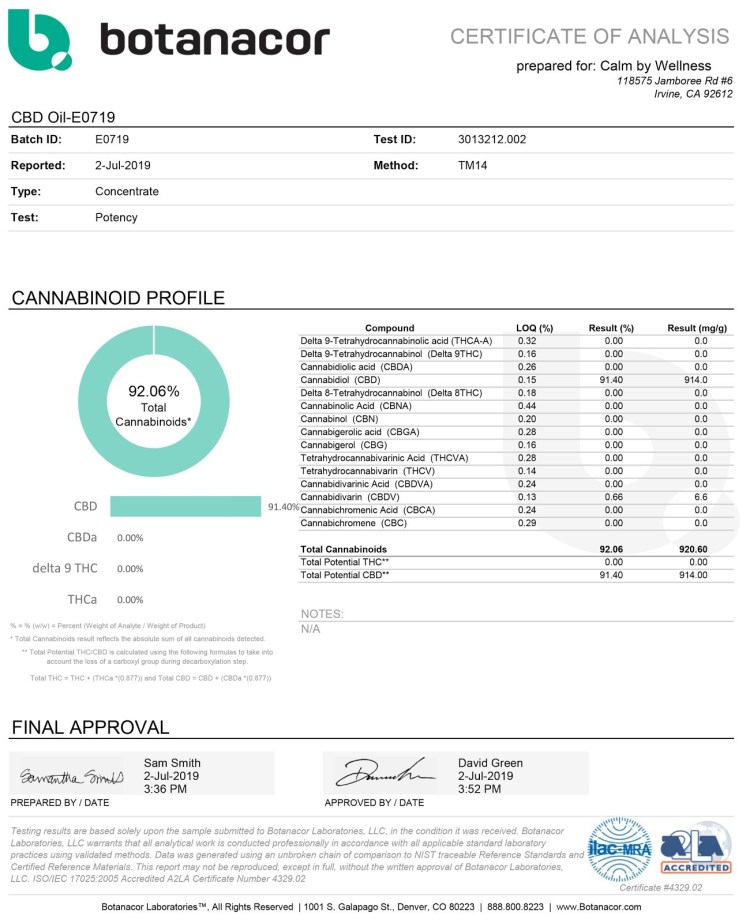
Two letters, C of A. Short for Certificate of Analysis, this is everything a consumer needs when searching for a CBD product. The NutritionalOutlook states a trustworthy C of A must reflect the true and representative properties of the subject material. Normally, a C of A will list each item of analysis required by the specifications of the material and report actual analytical data against the specification point or range of the corresponding analysis. COA’s are a must-have for reliable, law-abiding CBD manufacturers. They unveil a true composition for each product.
WHAT TO EXPECT ON A C.O.A.
For CBD, Medium.com states that a Certificate of Analysis should include a total list of cannabinoids, microbiological levels, terpenes, and possible contaminants such as pesticides, solvent residue or heavy metals.
On your COA you will see some of the basic following information:
- Product Identity– Product name, item #, batch #, manufacturer, manufacture date, and expiration date.
- Product Source– Country of origin, scientific/botanical name, and plant part if derived from a botanical source, which CBD is.
- Product Type– Crude material, powder, cut, and whole herbal extract.
- Physical Property– Color, odor, taste, appearance, PH value, and particle size.
- Identification Method– Microscopic
- Chemical Assay and Method– Active or marker compounds, purity or specified ranges, and titration.
Most importantly on the Certificate of Analysis, it should be signed and dated (see the picture above for reference) by a quality control or quality assurance person representing the manufacturing or testing company.
TIPS
If you, the consumer are unsure of a product, don’t be afraid to ask questions. Simply ask to see the Certificate of Analysis, because any law-abiding and ethically behaving organization will be able to provide such information. To ensure that the COA links with the specific product make sure the batch or ID number of the product matches the number on the COA. To save troubles, it may be smart during your search of CBD to call ahead at whatever store you’re looking at and check if they can provide a C of A. If they can not, that is your main sign to not go through with a purchase. This will separate the legit companies that care about the well being of their consumers as well as having a true passion for the alternative medication from the pop-up shops who are looking to make fast and easy money. With no FDA regulations put into place it allows these fake CBD companies and their products to make an entrance into the industry, which has the ability to ruin the CBD image or worse, take the hope away from potential consumers that this alternative has the ability of a beneficial impact.
For more in depth information on how to read a Certificate of Analysis, learn about some of the scientific/botanical names, and other information not addressed in this article, reference the two links above in the post.
Lastly, stay educated!!!
 CBD Health & Wellness